Case Study
AutoSmart Audit
Role: Product Designer — UX Flow Optimization, UI Redesign
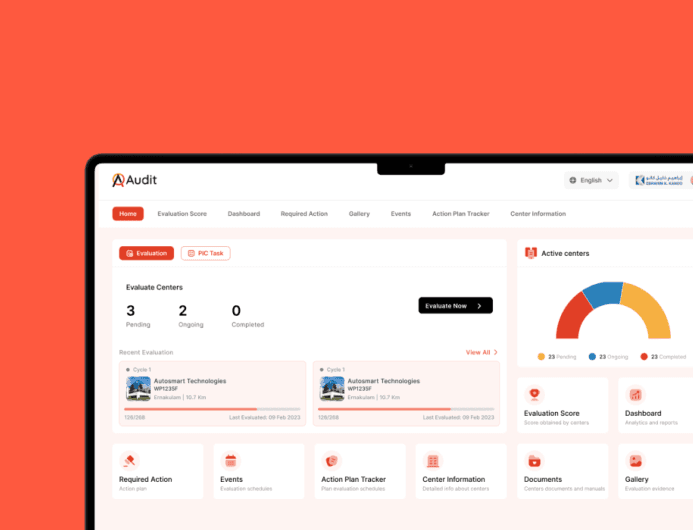
Overview
AutoSmart Audit is an automotive audit-management platform used across 1,600+ facilities with 1,000+ users globally. The product enables automotive networks to digitize audits, manage compliance, capture evidence, and gain real-time insights across locations.
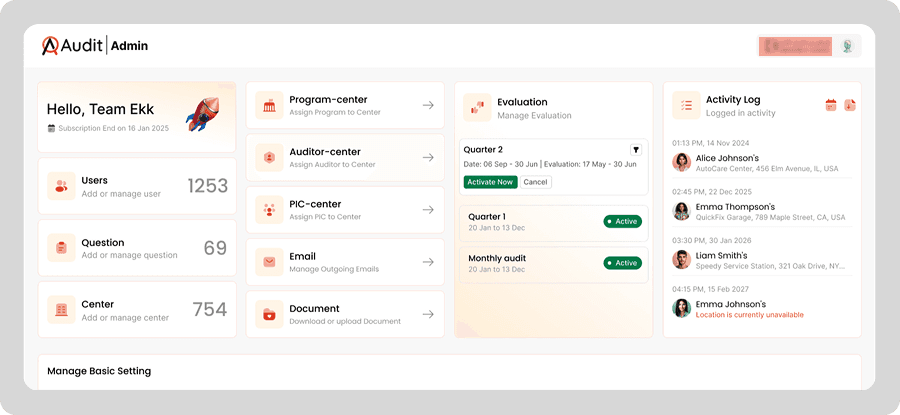
When I joined the team, AutoSmart Audit was already a live, customer-facing product. My responsibility was to improve usability, redesign critical workflows, introduce UI consistency, and design the first dedicated mobile experience for field auditors.
The Challenge
Despite strong adoption and enterprise usage, several UX challenges affected daily operations:
Audit flow was confusing, making it hard for auditors to track progress
Dashboard lacked priority-based insights, slowing management decisions
No mobile-specific design existed, forcing users to rely on desktop layouts on mobile
Cluttered screens increased cognitive load during real-time inspections
At this scale, even small usability issues had a large operational impact.
My Responsibilities
As a Product Designer, I worked on:
Conducting a full UX audit of the existing product
Identifying usability gaps across desktop and mobile
Redesigning end-to-end audit workflows
Designing the first mobile product for AutoSmart Audit
Improving dashboard clarity and data hierarchy
Establishing UI consistency across screens and components
Iterating features and flows based on stakeholder and user feedback
Process
I studied how audits actually happen across facilities: moving between bays, inspecting vehicles, capturing photos, and making quick decisions.
This helped me understand:
where users lost time
where the interface overwhelmed them
which steps felt unclear inside the flow
how mobile constraints affected speed
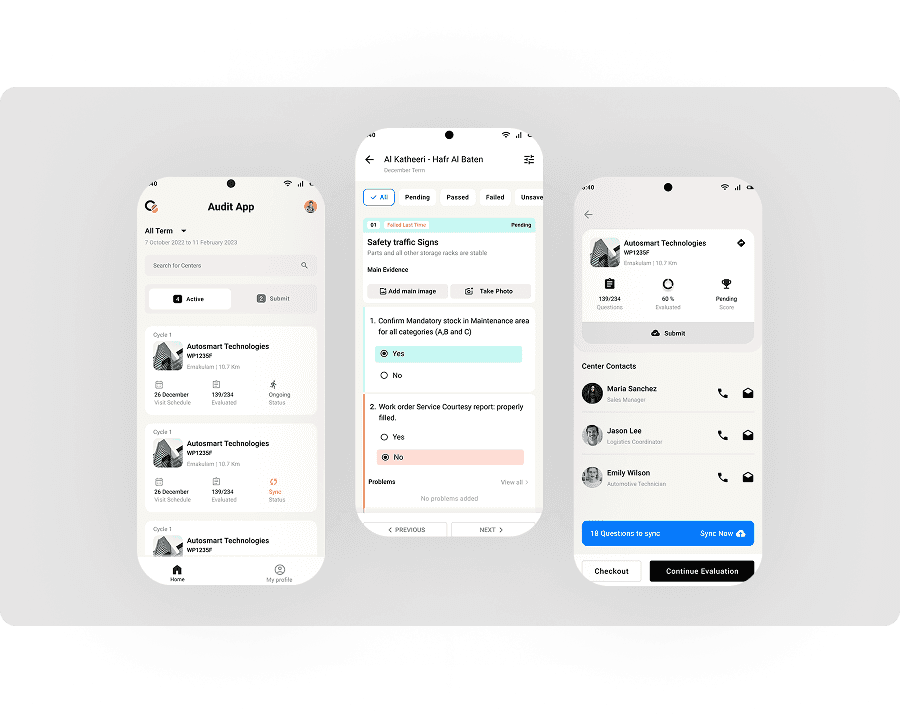
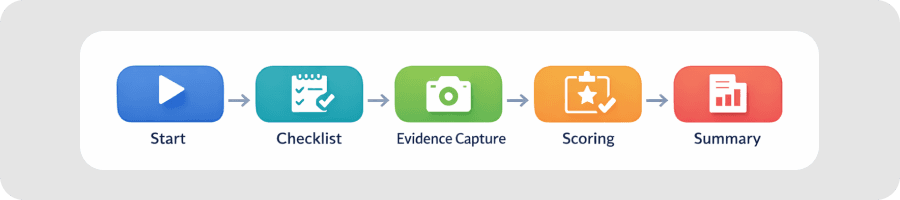
I simplified the core audit journey into a clearer structure:
Start → Checklist → Evidence Capture → Scoring → Summary
Key improvements:
reduced cognitive load
introduced visual hierarchy
clear navigation between sections
better grouping of related tasks
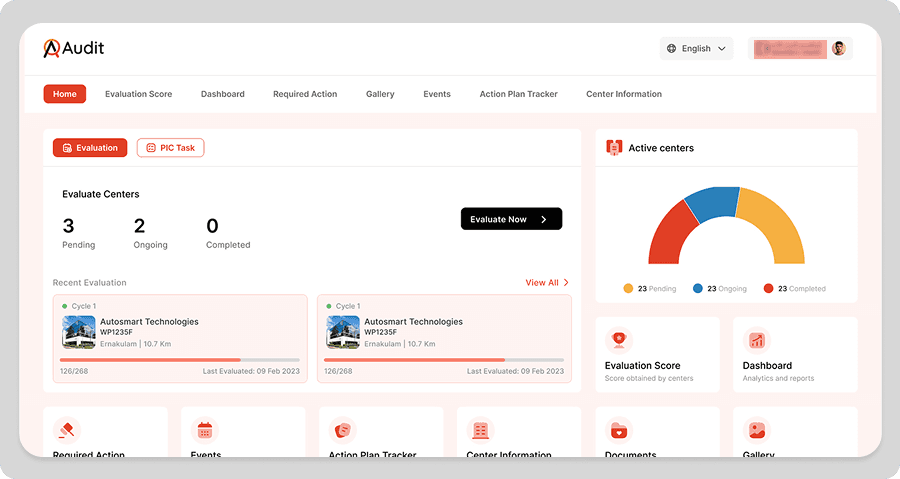
The earlier dashboard had data but lacked actionable clarity.
I redesigned it to focus on:
high-risk findings
pending audits
compliance status
quick access to priority actions
This shifted the dashboard from simply “showing data” to helping users take faster decisions.
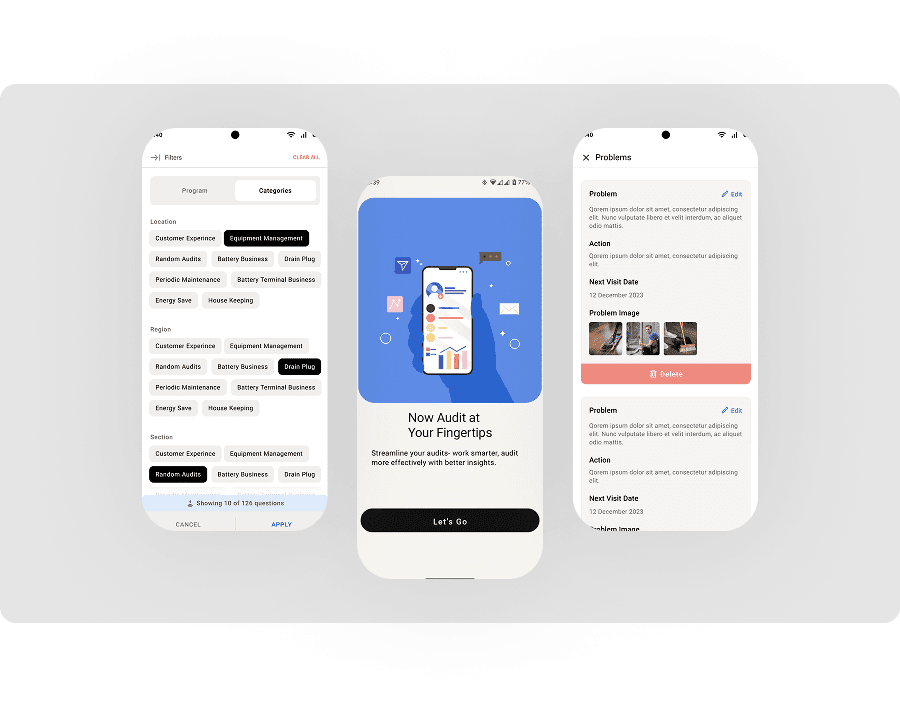
Before I joined, AutoSmart Audit did not have a mobile design.
Auditors used the product on their phones through desktop layouts — resulting in cluttered screens and difficult interactions.
I created the first mobile-optimized experience:
clean, breathable layouts
thumb-friendly components
large tap targets for field use
simplified evidence capture
clear step-by-step navigation
progress indicators for long checklists
This made the product finally usable during live inspections.
5. UI Consistency & Visual Refresh
To improve usability and brand perception, I refreshed the product with:
consistent spacing & padding
improved color logic
typography hierarchy
unified component patterns
better visual balance across all screens
The product began to feel more modern, stable, and easier to learn.
Outcome & Impact
The redesigned experience delivered meaningful improvements at scale:
First mobile product launched, enabling field-friendly audits
Cleaner, more intuitive audit flow, reducing confusion
Faster audit completion, especially on mobile
Improved dashboard clarity for management teams
Consistent UI experience across desktop, tablet, and mobile
Positive usability feedback from internal teams and auditors
Stronger product perception during enterprise demos
These improvements supported 1,000+ users operating across 1,600+ facilities worldwide.
🏆 Industry Recognition
AutoSmart Audit was awarded Digital Product of the Year at the Automechanika Dubai Awards 2023.
This recognition validated the product’s real-world impact in digitizing automotive audits at scale and reinforced the importance of building enterprise-grade, user-centered experiences.
Being part of an award-winning product strengthened my experience designing for global users, complex workflows, and high-stakes operational environments.
Reflection
This project highlighted the importance of designing for real operational contexts, not just ideal scenarios. By simplifying workflows, improving clarity, and introducing the first mobile experience, I helped transform AutoSmart Audit into a more human-centered and scalable product.
Good design, especially in enterprise tools, is about removing friction and enabling people to do their jobs with confidence.
Design Screens