Case Study
Role: Product Designer — Platform UX, System Unification, Add-on Design
Overview
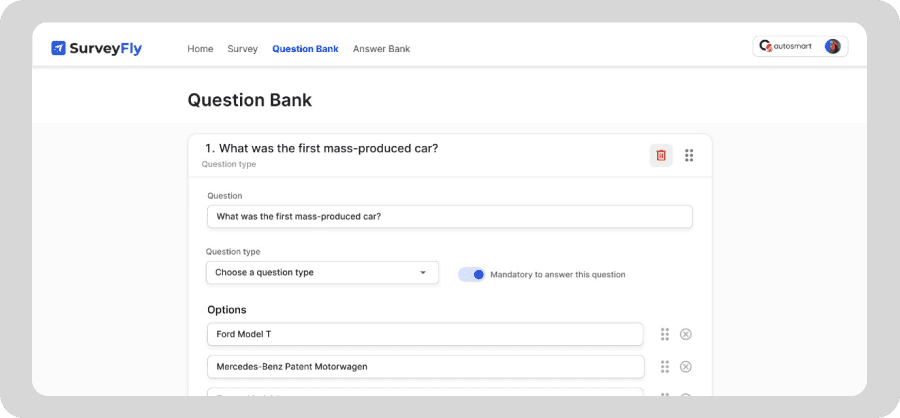
The Centralised Quiz & Survey System is a dedicated, reusable platform designed to handle surveys, quizzes, exams, feedback, and similar assessment features across AutoSmart products.
Earlier, these features existed inside multiple products separately. Over time, this created duplication, inconsistency, and scalability issues.
The goal of this project was to design a single, centralised system that could function as:
a standalone survey / quiz system, and
a plug-and-play add-on usable across any AutoSmart product or client system
With this approach, updating the central system automatically updates the feature across all connected products.
The Challenge
Before centralisation, survey- and assessment-related features were scattered across products:
Surveys, exams, feedback, and quizzes existed as embedded features in multiple products
Each product had slightly different flows, UI, and behavior
Enhancing or fixing a feature required reworking it separately in every product
Feature updates were slow, costly, and inconsistent
There was no dedicated system focused purely on surveys and assessments
The challenge was to extract these overlapping features into a dedicated system, without losing flexibility — and make it reusable across any product and any company.
My Responsibilities
As Product Designer, I was responsible for:
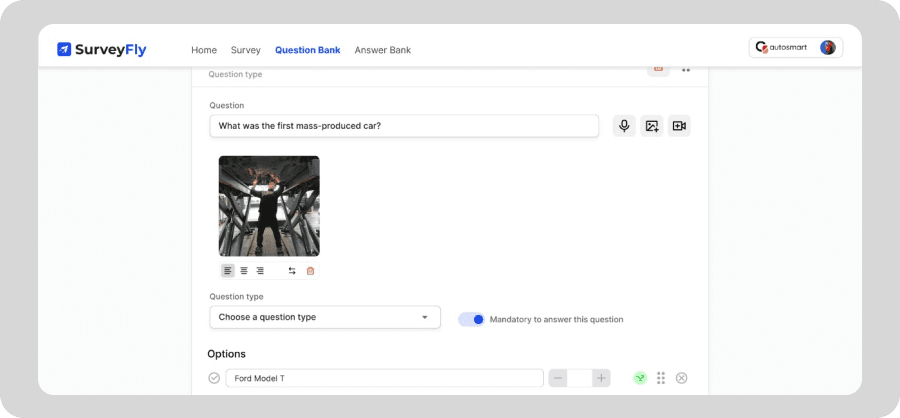
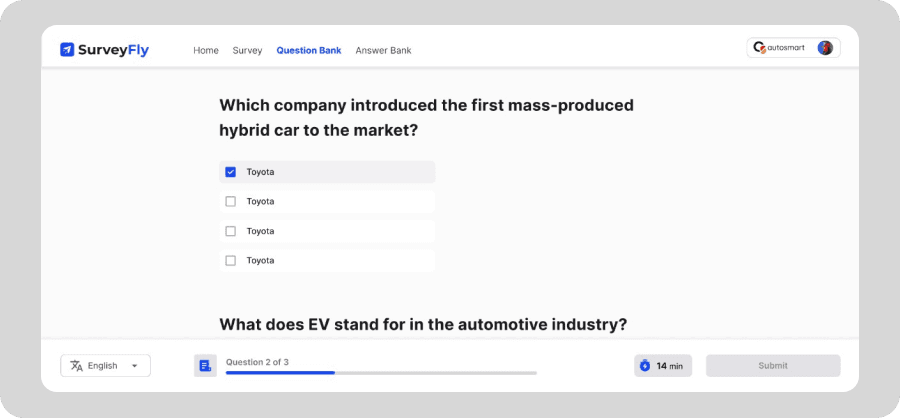
Designing a dedicated, centralised system for surveys, quizzes, exams, and feedback
Creating UX flows that support multiple use cases from a single platform
Designing the system to work as both a standalone product and an add-on module
Ensuring features could be reused across different products without redesign
Creating a neutral, scalable UI that fits into different products and companies
Enabling future feature updates to propagate across all products automatically
Process
I reviewed multiple AutoSmart products and mapped overlapping features:
surveys
quizzes
exams
feedback forms
evaluation flows
Although the intent was similar, each implementation differed slightly — creating fragmentatio
Instead of fixing each product individually, I designed a dedicated system focused entirely on assessment use cases.
This system became the single source of truth for:
question structures
response flows
submission logic
evaluation patterns
result handling
Products could now consume these features, rather than own them.
A key design requirement was reusability.
I designed the system so that:
it can run as a full standalone product
individual features can be enabled or disabled
any AutoSmart product can integrate it as an add-on
updates made in the central system are reflected everywhere
This eliminated the need for repeated redesign or reimplementation.
Because the system serves multiple products and companies, the UI was designed to be:
clean and neutral
component-based
easily configurable
adaptable to different product contexts
This ensured consistency without forcing uniform branding.
Outcome & Impact
The centralised approach delivered long-term product and design benefits:
One dedicated system for surveys, quizzes, exams, and feedback
Consistent experience across all products
Single update point — feature improvements reflect everywhere
Reduced design and development duplication
Faster rollout of new features
Easier onboarding for new products and clients
Strong internal alignment around platform scalability
The system became a foundation, not just a feature.
Reflection
This project reinforced the importance of platform thinking over feature thinking.
By centralising overlapping functionality into a dedicated system, I helped AutoSmart move from fragmented implementations to a scalable, maintainable ecosystem.
Designing this system strengthened my ability to think in terms of product architecture, reuse, and long-term impact, not just individual screens.
Design Screens